The Best Type Of Meditation
By Jon Terrell, M.A.
Comparing Mindfulness, Concentration and Active Meditation
What is the best type of meditation for you? In this guide we will look at the three main types of meditation. We'll start with meditation benefits generally, and then look at mindfulness, concentration types and finally active meditation.

Meditation Benefits-A Brief Guide
Imagine your doctor prescribing the perfect medicine:
- If your blood pressure is high, it lowers it.
- It boosts your immune system to help you fight colds and other illnesses.
- It reduces your stress and promotes relaxation.
- It helps you use oxygen more efficiently, which improves brain function, including memory, and helps you breathe easier.
- It reduces pain.
- It reduces or eliminates many minor health issues you've been experiencing.
- It even helps you feel better about yourself. And amazingly, it has no negative side effects.
Even more amazing, it's low-cost or free.
That medicine is meditation.
Meditation benefits play an invaluable role in your overall wellness, and it can be a tremendous aid to personal awakening. It is true mind-body medicine.
What's the best type of meditation for you? That depends...so keep on reading to learn more. Each type of meditation offers different benefits, and its effects vary by type. Each one has a learning curve and takes a while to learn and experience its benefits.
My primary practice is what I call Advanced Meditation, described below. It's advanced not because it's harder to learn or only for experienced meditators. The word "advanced" refers to how quickly you can apply it to your daily life and experience helpful changes, whether in personal relationships, feeling centered, creative expression, or problem-solving. It is a safe, effective, step-by-step method, best learned by working with a dedicated teacher. Is it easy to learn? For some, very easy. For others, like me, it took a while for me to experience, but once I did, it was "Wow!" More on that below.
Physical Benefits of Meditation
The physical benefits of meditation include a lower heart rate, normalized blood pressure, lower stress-related hormones, reduced free radicals, lower cholesterol, improved lung function, improved digestion, and a younger biological age. Meditation helps with numerous health conditions, including insomnia, asthma, arthritis, irritable bowel, fibromyalgia, and headaches. It also helps with pain management.
Psychological Benefits of Meditation
Psychological meditation benefits include reduced anxiety, irritability, and depression, increased memory and learning capabilities, and improved mood and emotional stability. Meditation improves self-esteem and self-acceptance. Studies show that regular meditators have increased activity in brain areas associated with creativity and moral reasoning, and that their brain waves are more coherent.
Meditation benefits reported by practitioners include a greater sense of the interconnection of all life, greater acceptance, peace, a more positive, open outlook, feeling more youthful, higher self-esteem, and much more.
The effects of meditation described by advanced practitioners:
- Freedom from the tyranny of the "monkey mind" that is like a 24/7 movie of thoughts, images, feelings, and memories.
- A sense of Oneness emerging, a feeling of returning Home. This brings deep gratitude for all life and is a huge relief.
The Best Type Of Meditation For You
Concentration Meditations-Is this the best type of meditation for you?
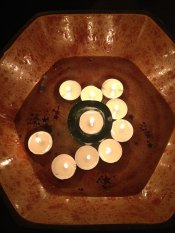
Concentration Methods focus our awareness on a specific object, an image (such as a religious figure), a sound, or even the breath itself. Concentration practice narrows our awareness, zeroing in closer and closer on the object. This can lead to a deep sense of relaxation as the observer and the observed merge into oneness, transcending the sense of a separate self. Concentration practice develops the ability to focus more deeply.
Transcendental Meditation (TM) is the best-known brand of concentration practice. It's been extensively researched. You learn a Sanskrit word or phrase (a mantra) that you repeat silently to yourself over and over to relax and move into a place of awareness beyond thinking. Transcendental Meditation training is available worldwide, and you can find local training in the USA at https://www.tm.org/centers.
Professor Herbert Benson's research into what he called the Relaxation Response showed that the results aren't limited to Transcendental Meditation and its specific mantras.
Chanting as a concentration meditation method: A musician or musicians often lead chanting, playing Indian instruments such as a harmonium, a keyboard pumped to create a drone, percussion for rhythm, and a variety of other instruments. The singer or singers chant various Hindu religious songs, often about various gods in that tradition, in a call-and-response with the audience. This devotional singing is called Kirtan. As the rhythm speeds up, the musicians and audience can often rise into an ecstatic state of consciousness.
Another source for concentration meditation is Deepak Chopra. He has teamed up with Oprah Winfrey and others to periodically offer 21-day guided concentration meditations for free or at a low cost. Go here to watch.
Many other types of concentration practice exist.
Try one yourself:
- Simply sit quietly for a few minutes and focus your awareness on your breath without trying to change it; just observe. You might find this difficult, as thoughts immediately intrude! Read the Mindfulness Meditation section below.
- Or pick a sound, word, or short phrase, such as "OM" or "Peace," and repeat it silently and deliberately. You may feel some relaxation in a couple of minutes, but it often takes 20-30 minutes to move into a deeply relaxed state beyond thought.
- Reading about it will do little beyond building your knowledge base. Be sure to allow time to practice this or another type of meditation so you can experience its benefits for yourself. Meditation shifts us from our everyday consciousness and takes practice, but you may get a quick glimpse of its benefits by trying these suggestions.
Mindfulness Meditation - Is this the best type of meditation for you?
Mindfulness, or Insight, or Buddhist meditation, is observing or watching your mind moment by moment. Instead of concentrating your focus, your awareness expands to include everything inside (thoughts, sensations, emotions) and outside (perceptions through your senses). Usually, you start with your breath as your home base, and when you get distracted, you return to the breath.
This builds sensitivity to the present moment, one of meditation's benefits. As you try to be mindful, you'll quickly notice you get distracted constantly and even forget you are meditating. You will get caught up or distracted. That is part of the practice. The most important part is remembering when you're distracted and learning to quickly return to your breath.
That's it! It is not about being perfectly present all the time. That is a goal we can all aspire towards. It is mostly about remembering and returning to the present moment, breath by breath.
Try it: Sit for a few minutes with your eyes open. Focus on either your breath or a point on the floor in front of you. But instead of concentrating solely on that, as in the previous type of meditation, gradually expand your awareness to the constantly changing flow of thoughts, feelings, and sensations that enter your mind. As you find yourself distracted and caught up in a story or thought, just bring your focus back, without self-judgment, to the present moment and your initial object (breath or point on the floor).
Gradually, often over a long period of time, your present-moment awareness increases, along with a sense of presence or acceptance. Mindfulness is not restricted to formal meditation practice, but you can bring it to any activity by bringing observing or present-moment awareness to whatever you do.
Mindfulness instruction is available in many places. Students of this approach to meditation often find that a several-day retreat can be valuable. Resources include Dan Harris, who has a useful app, Goenka, and Insight Meditation.
Active Meditation-Is this the best type of meditation for you?
Active Meditation is where I have the most expertise. I've practiced and taught it for over 50 years.
In this type of practice, you use thought to actively engage your mind. It is related to, but different from, visualization or imagery.
Let's start with that:
Experience the power of visual imagery: With your eyes closed, imagine sitting at a dining table with a bowl of fruit in front of you. Take a moment to really see the fruit. Now, pick out a ripe lemon. Hold it in front of you and see its bright yellow color and slightly oily skin. Place it on a cutting board and cut it into wedges. Now pick up a slice and take a big bite.
What happened? When I first tried this, I was shocked at the power of my mind. That is an example of imagery. We usually see the image projected out in front of us, like watching a movie on a screen.
When people start out with the Active Meditation which I teach, they often try to imagine it like that, using imagination to visualize the meditation in front of them or out there. As their brains relax, they eventually shift to experiencing it in their body, which is simpler. The key is what my teachers called "Let." We start with the thought, then relax, pause, and let it happen.
Plenty of imagery-guided meditations are available- journeys that use your mind to relax you, for example. "Imagine you are floating on a raft on a beautiful, warm summer day..."
The active meditation techniques I teach go beyond imagination to direct experience inside your body, which supports physical and psychological awakening. They are also techniques you use in day-to-day activities, "beyond the mat."
When I was learning active meditation at the School of Actualism (now called Actual Design), I often meditated for an hour or so, but in practice I apply what I learned in short periods throughout my day as needs arise.
In fact, this is a primary difference between Active Meditation and Concentration or Mindfulness Methods: You learn to use this approach in daily activity. The dedicated meditation time "off the mat" becomes the day-to-day focus, integrating the techniques into your daily life, driving, working, eating, etc.
I call this Advanced Meditation. This site focuses on this type of meditation.
Advanced Meditation (A.M.), which I teach and practice, is uniquely suited to the modern world. It's step-by-step, body-oriented, and practical. It includes hands-on bodywork and energy-healing techniques to accelerate personal awakening.
What Is The Best Type Of Meditation For You?
My suggestion is to spend some time checking out each method. I have friends who are dedicated to mindfulness meditation and sit each morning. Other friends practice Transcendental Meditation daily and never skip it. I also have numerous friends who work with the active meditation approach I teach.
You can certainly practice all three. My recommendation, though, is to choose one path and go deep in it. Attend live workshops if available. Join in virtual or in-person group meditations.